From Plantation to Palate: Tobago's Cocoa Renaissance -How a Caribbean island is reclaiming its legacy as a producer of the world's finest chocolate
- Avion W. Anderson
- Nov 18, 2025
- 8 min read

The Atlantic breeze sweeps across the verdant hills of Roxborough, carrying with it the earthy, intoxicating aroma of fermenting cocoa beans.
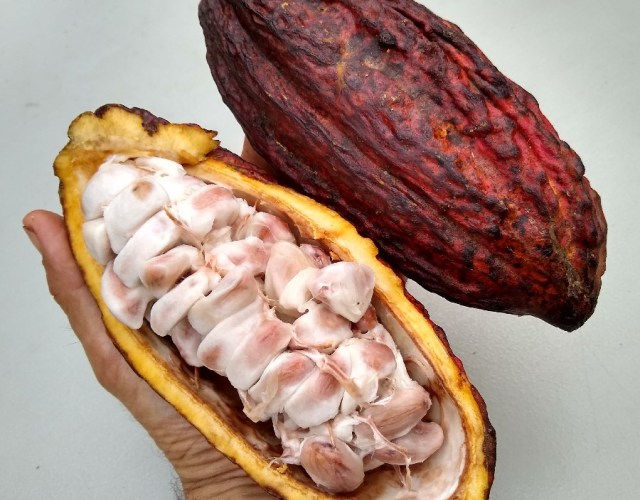
Here, in the green heart of Tobago, Duane Dove walks through rows of cocoa trees heavy with colorful pods; yellow, green, orange, and deep purple, each one a promise of the island's sweetest treasure.
This is the Tobago Cocoa Estate, where centuries of heritage meet modern artisan craftsmanship, and where a once-dominant industry is staging a remarkable comeback.
Tobago's relationship with cocoa is one of triumph, tragedy, and now, revival. It's a story written in the soil, told through generations of farmers, and tasted in award-winning chocolate bars that bear the island's name across international markets.

The Golden Age
The history of cocoa in Trinidad and Tobago begins in 1525, when Spanish colonizers first planted Criollo varieties. But it wasn't until the 18th century that cultivation truly took root, literally and economically.
By the late 1800s, the Charlotteville Estate in Tobago had been converted to cocoa production, joining a wave of plantations across both islands that would transform the nation into a global powerhouse.
The reasons were as practical as they were profitable. Unlike sugar, which demanded substantial capital investment and intensive labor, cocoa offered a more accessible entry point for smaller colonists.
The trees thrived under the protective canopy of shade trees, the beloved "madre del cacao" creating what one 19th-century observer described as "impervious and ever verdant" working conditions where even Europeans could labor alongside others without succumbing to the tropical heat
.
By the 1830s through the 1920s, Trinidad and Tobago achieved what seemed impossible for such a small territory: they became the world's third-largest cocoa producer, responsible for 20 percent of global production.
The particularly fine flavor of Tobago's beans earned the island international recognition, with estates like Roxborough concentrating exclusively on cocoa as a viable cash crop.
The cultivation was largely driven by an unlikely group of pioneers, the Cocoa Panyols. These were families of Venezuelan, Colombian, and Spanish descent who migrated across the Gulf of Paria, many during the post-slavery labor shortage following 1838.
They established themselves in the Northern Range mountains and valleys, developing a unique system: families would acquire crown lands, clear the forest, plant cocoa, and when the trees matured years later, sell the estate at a profit before repeating the process elsewhere.
Alternatively, plantation owners contracted peasant families for five to seven years to develop forested areas, allowing them to grow market crops while establishing cocoa groves. Upon maturity, owners would compensate them per bearing tree.
Production peaked in 1921 when Trinidad and Tobago exported 33,950 tons of cocoa beans to European markets, a figure that would never be matched again.
The Great Decline
The collapse came swiftly and from multiple directions. World War I disrupted sea routes, causing beans to spoil before reaching European consumers.
The Great Depression, which occurred in the 1920s, devastated global markets. Then came the most insidious threat: Witches' Broom disease arrived in 1928, a plague that attacked the entire cacao tree system and decimated plantations that had no resistance.
The vulnerable Criollo variety, prized for its delicate flavor but susceptible to disease, suffered catastrophically. By mid-century, the Imperial College of Tropical Agriculture worked to develop disease-resistant hybrids, giving rise to the Trinitario, a natural cross between Criollo and Forastero that would become Trinidad and Tobago's signature cocoa variety.
But disease wasn't the only challenge. The discovery of oil created competition for agricultural labor. Sugar prices rose, drawing farmers to crops that offered more immediate profits.
By 1969, an estimated 46,000 hectares were under cocoa cultivation; by 1986, this had plummeted to just 20,000 hectares. The agrarian system shifted from large plantations to smallholder farms, and Tobago's once-mighty cocoa industry faded into memory.
Hurricane Flora devastated Tobago's plantations in 1963, compounded by persistent bird pest problems. The golden age seemed irretrievably lost.

The Chocolate Renaissance
Yet something remarkable has been happening over the past two decades. The very qualities that once made Tobago's cocoa famous; the complexity of its Trinitario beans, with their balanced flavor profiles ranging from fruity and floral to earthy and spiced, have become increasingly valued in the global craft chocolate movement.
Enter a new generation of chocolate makers who see not ruins, but possibilities.
At the forefront stands Duane Dove's Tobago Cocoa Estate. After years working in Europe's food and beverage industry, Dove returned home with a vision: to rejuvenate cocoa production and transform Tobago from a raw material exporter into an origin for world-class finished chocolate.
The estate became the first in Tobago to produce its own bars, marking a crucial shift from commodity production to value-added manufacturing.
Dove's commitment to quality led him to collaborate with French chocolatier François Pralus, who understood both the exceptional nature of Tobago's beans and the painstaking work required to craft truly outstanding chocolate.
The result? Tobago Estate chocolates are genuinely single-origin, indeed, single-estate, made exclusively from Trinitario beans grown in Roxborough without blending from other farms.
The gamble paid off spectacularly. In 2019, the Tobago Estate Laura milk chocolate bar won gold at the Northwest Chocolate Festival in Seattle, the largest craft chocolate festival in the United States.
That same year, it brought home another prestigious award at the International Chocolate Awards World Finals in Guatemala.
By 2022, the Sea Salt Buccoo Reef and Laura Dark Milk varieties earned silver and bronze at the International Chocolate Awards European Finals.
These aren't mere novelties or local curiosities. They're chocolates competing and winning against the world's finest, bearing price tags that reflect their quality: expensive, yes, but as one reviewer noted, "you must expect to pay for quality."

Beyond the Bar
But Tobago's chocolate revival extends beyond single estates. House of Olando Chocolate in Scarborough produces stone-ground 70% bars using cacao harvested by the Tobago Cocoa Farmers Association, keeping the entire production process on the island.
Tobago Chocolate Delights has established itself as the only artisan chocolate manufacturer based in Tobago, creating handcrafted confections that showcase local flavors.
Across the channel in Trinidad, a broader movement has emerged. The Trinidad and Tobago Fine Cocoa Company, established in 2014 as a public-private partnership, aims not just to create exceptional products but to rehabilitate the cocoa sector across the entire region.
Brasso Seco Chocolate Co., Cocobel Chocolates, Gran Couva Fine Dark Chocolate, and numerous others have joined the renaissance, each bringing their own approach to bean-to-bar production.
What distinguishes these modern makers is their philosophy. Unlike the plantation era's focus on volume and commodity export, today's chocolatiers emphasize quality, traceability, sustainability, and fair labor practices.
Many pursue organic certification and ethical sourcing. They're not merely reviving an industry; they're reimagining it for the 21st century.
The rise has been supported by government initiatives. ExporTT has assisted in critical areas, including HACCP and Food Safety Modernization Act certification, facility upgrades, Geographic Indication protection, organic certification, feasibility research, and compliance implementation.
In 2018, the Ministry of Trade announced state funding for Tobago Cocoa Estate to support expansion and equipment procurement, recognizing the sector's potential contribution to exports.

Heritage and Tourism
The resurgence has created unexpected synergies with tourism. Tobago Cocoa Estate has evolved into a heritage park where visitors experience the complete cocoa journey.
Tours guide guests through the estate's history, offer hands-on participation in fermentation and drying activities, include fresh cocoa sampling, traditional cocoa tea tastings, and conclude with rum and chocolate pairings alongside meals showcasing local Tobago cuisine.
The National Cocoa and Chocolate Museum of Trinidad and Tobago preserves this agricultural heritage through restored plantation buildings; cocoa houses, managers' quarters, barracks, stables; some over a century old.
Visitors can handle artifacts from the 1800s, examine archival records naming indentured laborers, Spanish-Venezuelans, and Creole workers who toiled on the plantations, and participate in traditional "dancing d cocoa" on restored cocoa houses while learning songs once sung by estate laborers.
These experiences transform cocoa from commodity to cultural narrative, connecting tourists and locals alike to an industry that shaped the islands' demographics, economy, and identity.

The Trinitario Advantage
Central to this revival is the Trinitario bean itself. This natural hybrid, born from necessity in the 18th century after disease devastated Criollo plantations, represents a fortuitous marriage of characteristics. From Criollo, it inherited complex, refined flavors; fruity, floral, nutty undertones with low bitterness.
From Forastero, it gained robustness, disease resistance, and reliable yields.
The flavor profile of Tobago's Trinitario is particularly diverse, shaped by the island's unique terroir. Tasters.
describe notes spanning wood and spicescedar, cinnamon, clove, to grass and butter with tobacco leaf tannins, to tropical citrus with acidic red fruit characteristics.
This complexity makes Trinitario highly prized by premium chocolate makers worldwide and allows Tobagonian chocolatiers to craft distinctive products that stand apart in crowded markets.
Representing roughly 10-15% of global cocoa production, Trinitario occupies a sweet spot: more available than ultra-rare Criollo, but far more interesting than commodity Forastero.
For a small island, this positioning offers a competitive advantage. Tobago can never compete on volume with West African giants, but it can compete on quality and distinctiveness.

Challenges Remain
The revival hasn't solved all challenges. Labor shortages persist. Aging plantations require renewal. Competition from larger cocoa-producing nations remains fierce.
Many smallholder farmers struggle with the economics of cocoa versus other crops or wage labor opportunities.Climate change presents new uncertainties.
The cocoa tree's exacting requirements, consistent temperatures between 20-30°C, approximately 1,500mm annual rainfall, and humid tropical conditions, make it vulnerable to shifting weather patterns. Hurricane seasons bring recurring anxiety.
Infrastructure remains limited. Most estates still lack sophisticated processing equipment. Access to international markets requires navigating complex export regulations, quality certifications, and distribution networks. Capital for expansion is scarce.
Yet these obstacles haven't dampened enthusiasm. If anything, they've sharpened focus. The new generation of Tobago chocolate makers understands they're not just growing and processing cocoa, they're stewarding a heritage, demonstrating sustainable models, and proving that small islands can produce world-class specialty products.

Looking Forward
Standing in his estate overlooking the Atlantic, Duane Dove reflects on ambitions tempered by realism. He has big plans expanding production, reaching new markets, and developing additional product lines; but refuses to compromise the quality standards that earned his chocolate international recognition.
His priority remains "delivering to customers delicious chocolate made from the best raw materials, free from chemicals and exploited labor."
This philosophy echoes across Tobago's chocolate community. Whether at established estates or emerging micro-producers, the emphasis falls on craftsmanship over mass production, distinctiveness over homogeneity, sustainability over extraction.
The Tobago cocoa story has come full circle. From the commodity boom that made the island famous in the 19th century, through the devastating collapse of the mid-20th century, to today's artisan renaissance, cocoa remains deeply woven into the island's identity.
The difference now is intentionality, a conscious choice to rebuild the industry according to values that honor both heritage and future.
When you unwrap a bar of Tobago Estate chocolate today, you're tasting more than confection. You're tasting history, the Spanish introduction of cacao, the Panyol pioneers clearing mountain forests, the laborers singing in cocoa houses, the scientists developing disease-resistant varieties.
You're tasting place, Atlantic breezes, volcanic soil, tropical sun filtering through shade trees. And you're tasting possibility, the proof that a small Caribbean island can reclaim its legacy and compete at the pinnacle of global chocolate craft.
The cocoa trees in Roxborough are producing again, their polychromatic pods promising another harvest. The fermentation boxes are full.
The chocolate makers are at work. And somewhere, perhaps in Seattle or Bucharest or Amsterdam, judges are preparing to taste what Tobago has created.
The island's golden age of cocoa may have ended, but its platinum-aged aged refined, artisanal, and sustainable has just begun.


Comments